The Melbourne Athenaeum Library will be closed on Saturday April 25 for the ANZAC Day public holiday.
The library will be open regular hours on Friday April 24 and Monday April 27.
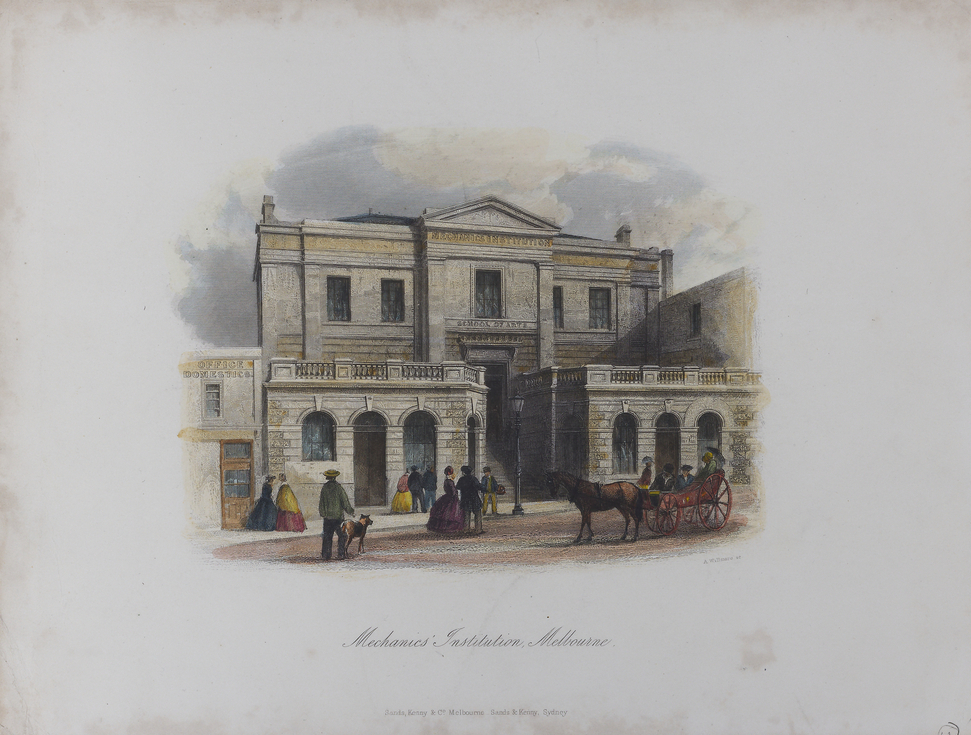
Thousands of performers have graced the stages at the Melbourne Athenaeum since it opened its Collins Street building in 1842. The roll call of performers contains many notable names and includes Dame Nellie Melba, Sir Laurence Olivier and Barry Humphries.
In the early days of the building there was an upstairs hall that accommodated a range of events including music classes, lectures and social and religious gatherings. The Liedertafel and the Philharmonic Society gave concerts, as did the music students.
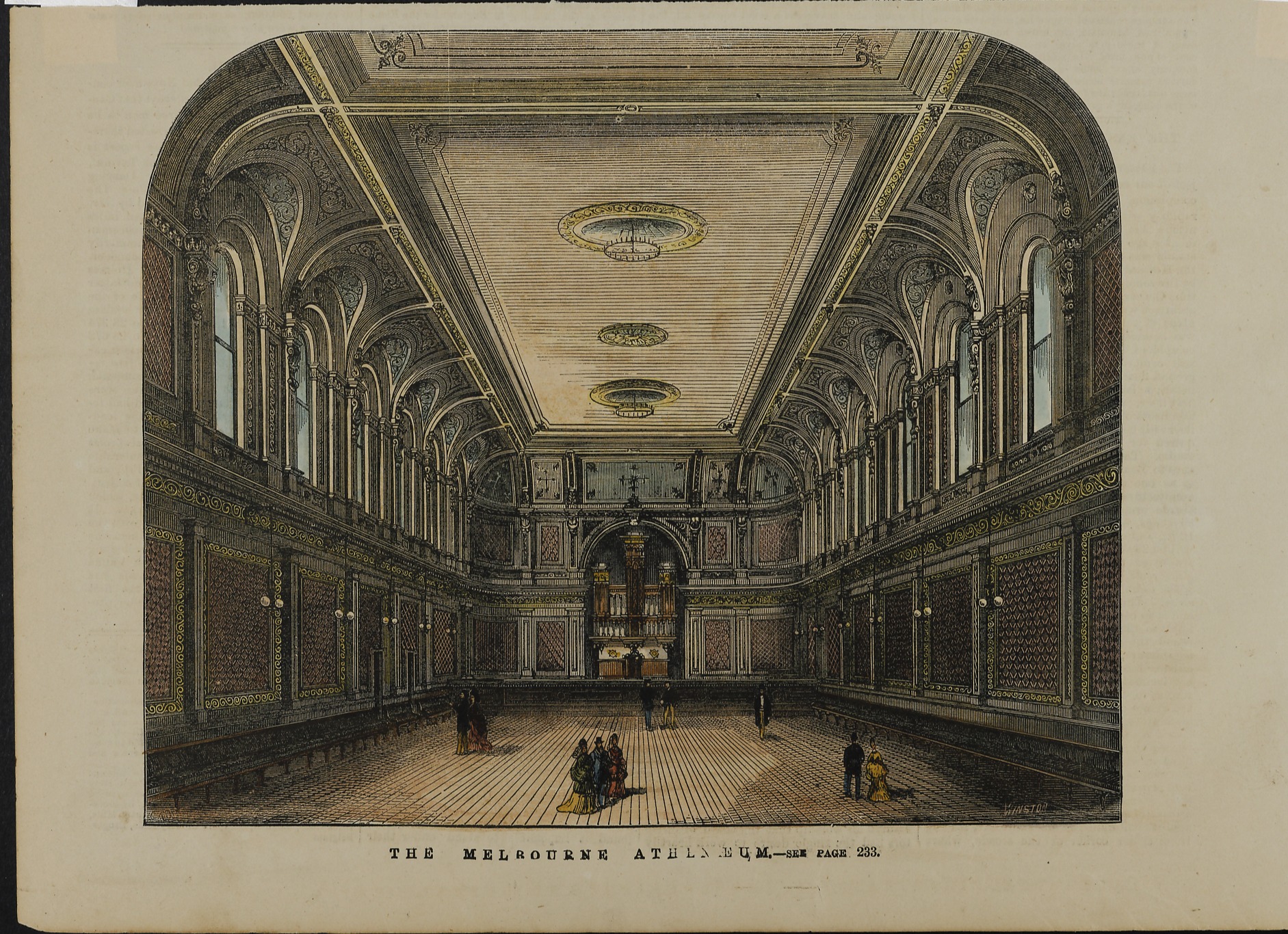
In 1872 a new large hall was built, which could accommodate 800 people. It had a stage that extended across the full width of the northern end and a balcony that could seat 150 at the southern end. It became a very popular space for musical and theatrical performances and was fitted with a floor that had been securely laid to allow for dancing.
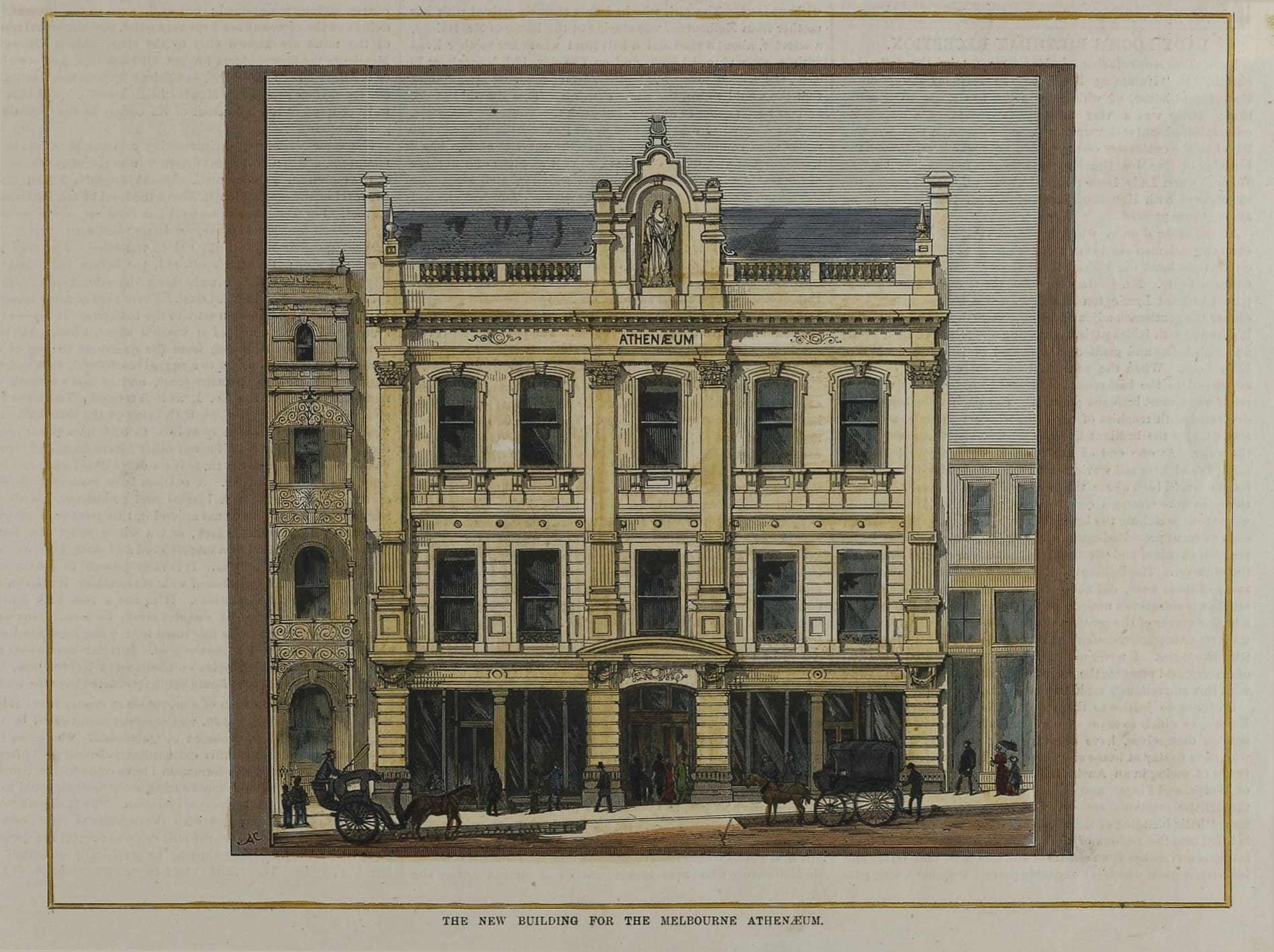
Renovations undertaken in 1886 resulted in the redecoration of the large hall and the construction of a small lecture hall upstairs, which is today known as Athenaeum 2. This space was fitted with a platform, so could cater for rehearsals, meetings and lectures.
The large hall was witness to the evolution of sound and pictures. Lectures were held accompanied by lantern and illuminated slides, and events were held using a vitascope, an early version of the film projector. Short films were shown in the large hall from 1900 and six years later, on 26 December 1906 the world’s first feature length film, The Story of the Kelly Gang, premiered. In 1910, a bio box was installed in the large hall to house the projectors and Australian classics such as Robbery Under Arms, For the Term of His Natural Life and The Squatter’s Daughter were screened.
In 1921, Frank Talbot, who had been leasing the hall to show films and live performances, travelled to the United States to publicise the new Australian film The Sentimental Bloke. While touring he discovered a new concept, that of the ‘little theatre’, a smaller theatre with tiered balconies where the audience was closer to the stage.
Returning to Melbourne, Talbot discussed his ideas with the Secretary of the Melbourne Athenaeum, Reginald Wilmot, and they approached the Committee of Management with a proposal to build a new theatre within the existing large hall. This was conditional on Talbot agreeing to an extended lease.
The construction of the new theatre required extensive excavation, removing tonnes of clay so the floor could be lowered. The ceiling was also lowered, the windows bricked up and interiors decorated in the Adam style. The new theatre now known as the Athenaeum opened on 23 December 1924 with a performance of comedy Dear Brutus by the Melbourne Repertory Theatre Company.
The Argus newspaper reported: “To many of the audience … it seemed incredible that such transformation could have been wrought in so brief a period.” The report praised the “perfect design of acoustics”, the “rich silk brocade of the drop curtain” and the “chair seats, wider than regulation size, which may have limited the accommodation of the theatre, but certainly increased the comfort of the audience”.
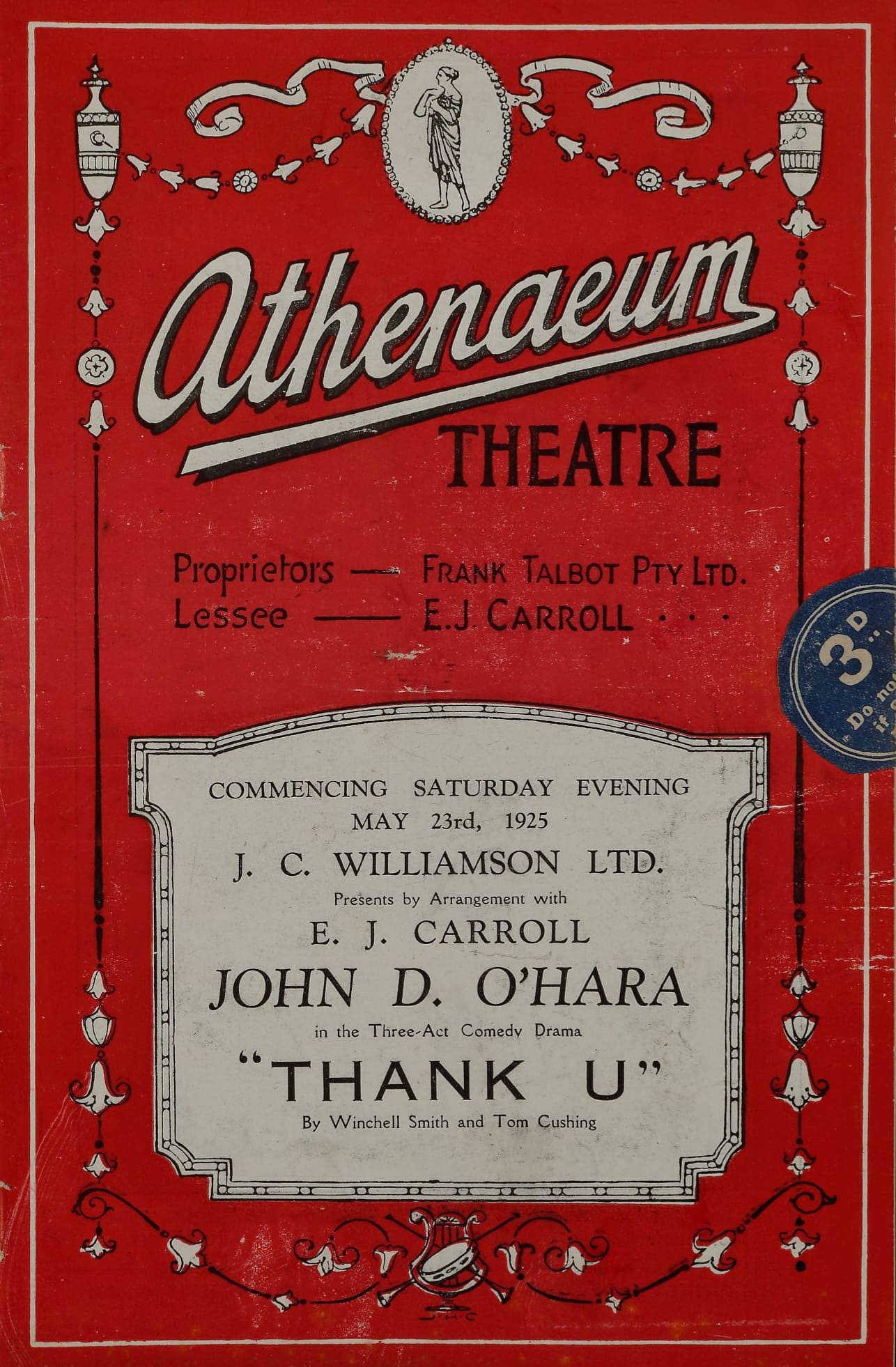
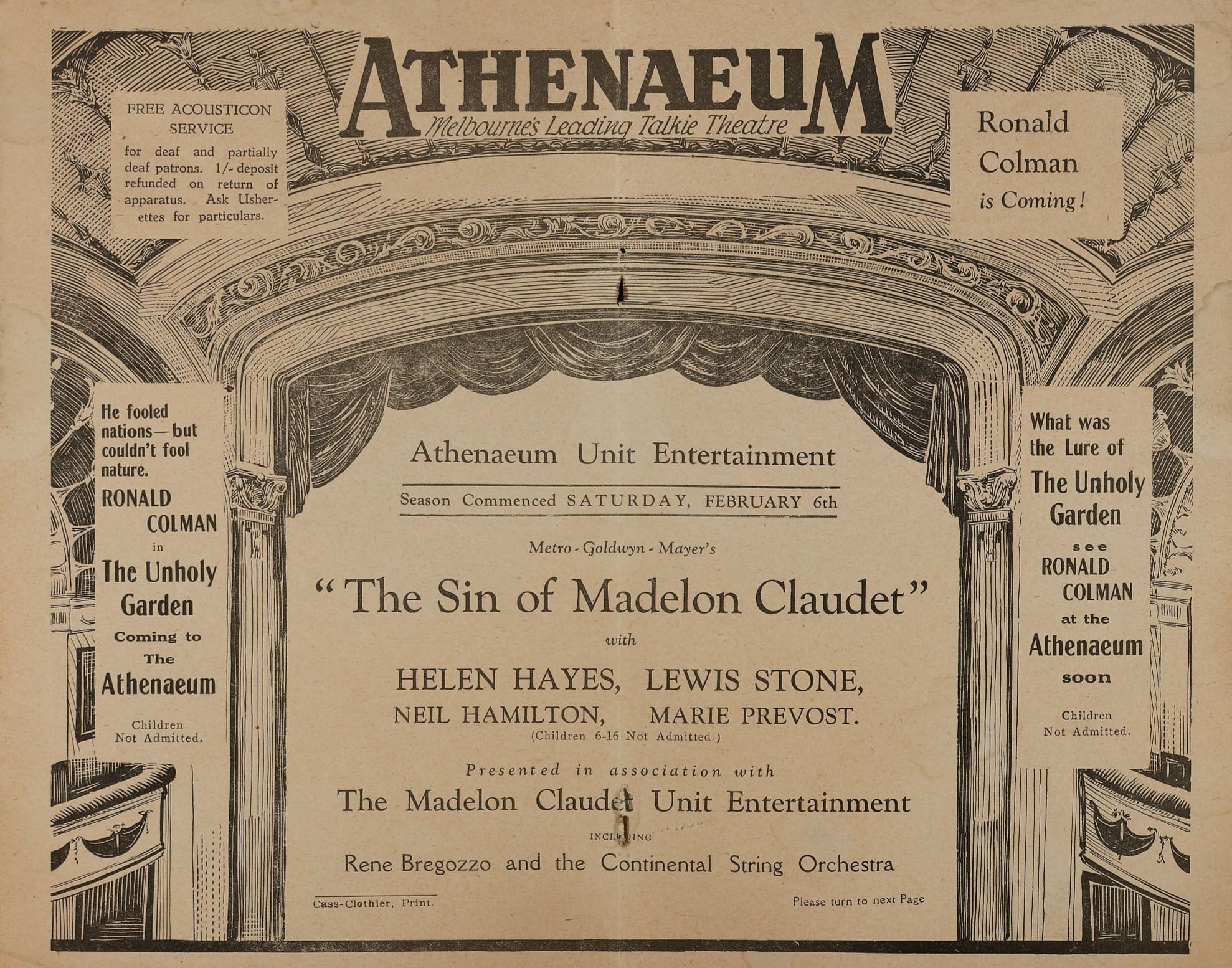
On 2 February 1929, the Athenaeum was once again at the forefront of developments in film being the first venue in Melbourne to introduce audiences to ‘talkies’ with the premiere screening of The Jazz Singer starring Al Jolson. Performing arts historian Frank Mr Van Straten recalled that during film screenings “to add to the elegant ambience, patrons enjoyed musical interludes from Cecil Parkes and his Strad Trio, and afternoon teas were served in the stalls”.
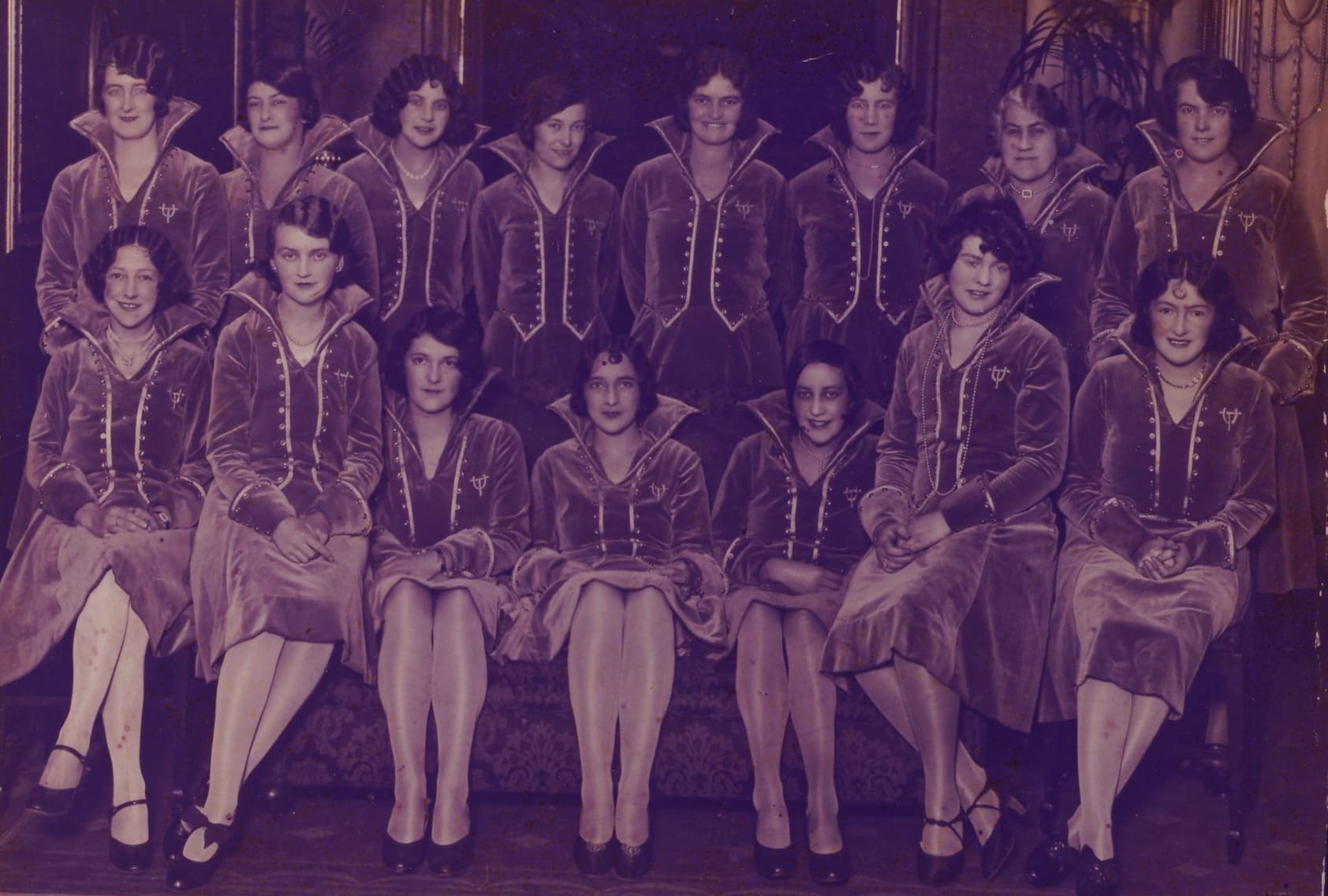
In the 1930s women were employed as usherettes. During this decade, Mr Talbot signed a contract with British Dominion Films to exclusively screen British films. The Athenaeum was promoted as “the first All-British Picture House in the world”.
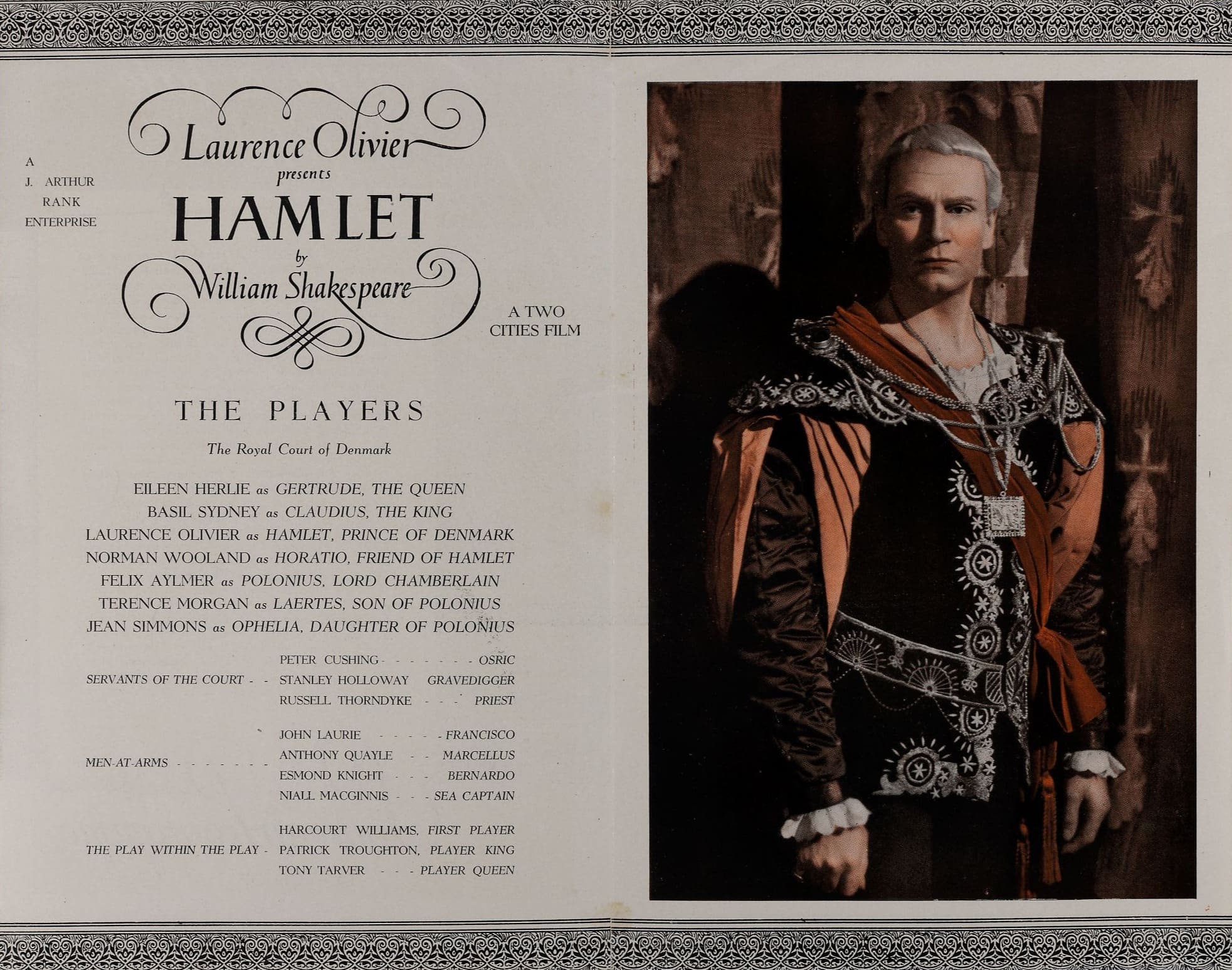
As part of this agreement, the Athenaeum screened many significant British films including William Shakespeare’s Hamlet, directed by and starring Sir Laurence Olivier in the lead role of Hamlet. Olivier travelled to Melbourne with his wife, Vivien Leigh, to attend the premiere screening of the film at the Athenaeum on 11 June 1948.
Alan Winn, who worked as a projectionist at the Athenaeum from 1957 to 1961, vividly recalls the set-up of the cinema and the experience of working in the building. Read his recollections here.
In the 1960s the theatre screened the first of the Pink Panther movies and the Beatles’ films A Hard Day’s Night and Help!
In 1970 Ken Brodziak’s Aztec Services and Sydney-based Phillip Productions leased the Athenaeum, installed a licensed bar and presented a series of live attractions, including satirical revue Oh, Sir Henry!, which was a celebration of Victoria’s controversial premier Henry Bolte. By the end of the year the Athenaeum was once again a cinema.
Films were shown at the Athenaeum until 1977, when the main theatre and the smaller hall were taken over by the Melbourne Theatre Company (MTC). New technical equipment was installed and the main stage was enlarged. After the MTC moved to the Victorian Arts Centre in 1984 the theatres were available to other management companies.
In 1986 they were leased by Greg Hocking and Tim Woods, who were later joined by Glenn Elston and Barry Janes. Tim Woods and Barry Janes have since moved on, but the theatres continue to be leased by Glenn Elston and Greg Hocking.
In 1991 the Victorian government’s Melbourne Planning Scheme provided $2.3 million for extensive renovations, including enlarging the foyer and restoring the proscenium and stage boxes. And in 2009 an orchestra pit was constructed and the seats and carpets in the main theatre were replaced.
Today, the 850-seat main auditorium continues to be a magnificent space to enjoy live performance with three levels of seating near the stage. This provides an atmosphere that performers appreciate due to the immediate feedback they receive from the audience.
Both theatres host a range of theatre, comedy and music performances and the building is a principal venue for the Melbourne International Comedy Festival. It is also home to both the Melbourne Opera Company and The Australian Shakespeare Company.