The Melbourne Athenaeum Library will be closed on Saturday April 25 for the ANZAC Day public holiday.
The library will be open regular hours on Friday April 24 and Monday April 27.
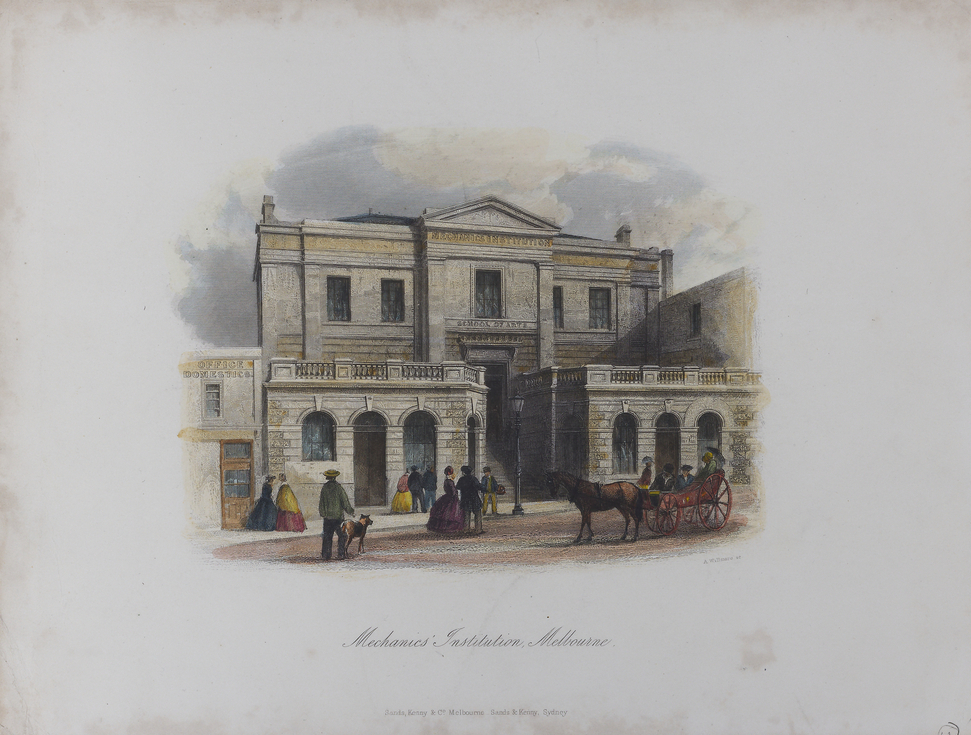
In 1840, an annual subscription of one pound enabled members to become part of an educational and cultural hub, the Melbourne Mechanics’ Institution. The library was regarded as the heart of the institution, a place of knowledge that embodied the institution’s aim, “the diffusion of scientific and useful knowledge among its members and the community generally”.
The library moved into the ground floor of the newly-built Melbourne Mechanics’ Institution in 1842 with over 300 volumes. Two years later, a separate reading room was established providing local, regional and overseas newspapers and magazines, which were highly valued in a colonial town. Women were also able to join as individual members. The first to do so was Mary Anderson in 1848, who was known under her married name. Read about her in “First Lady - Mrs Anderson” by Margaret Bowman.
Gas lighting was introduced throughout the building in 1856, replacing the 60 lbs of candles that were used in the reading room alone every three months. At the end of this decade, the Committee of Management singled out the library as the “principal attraction of the institution”.
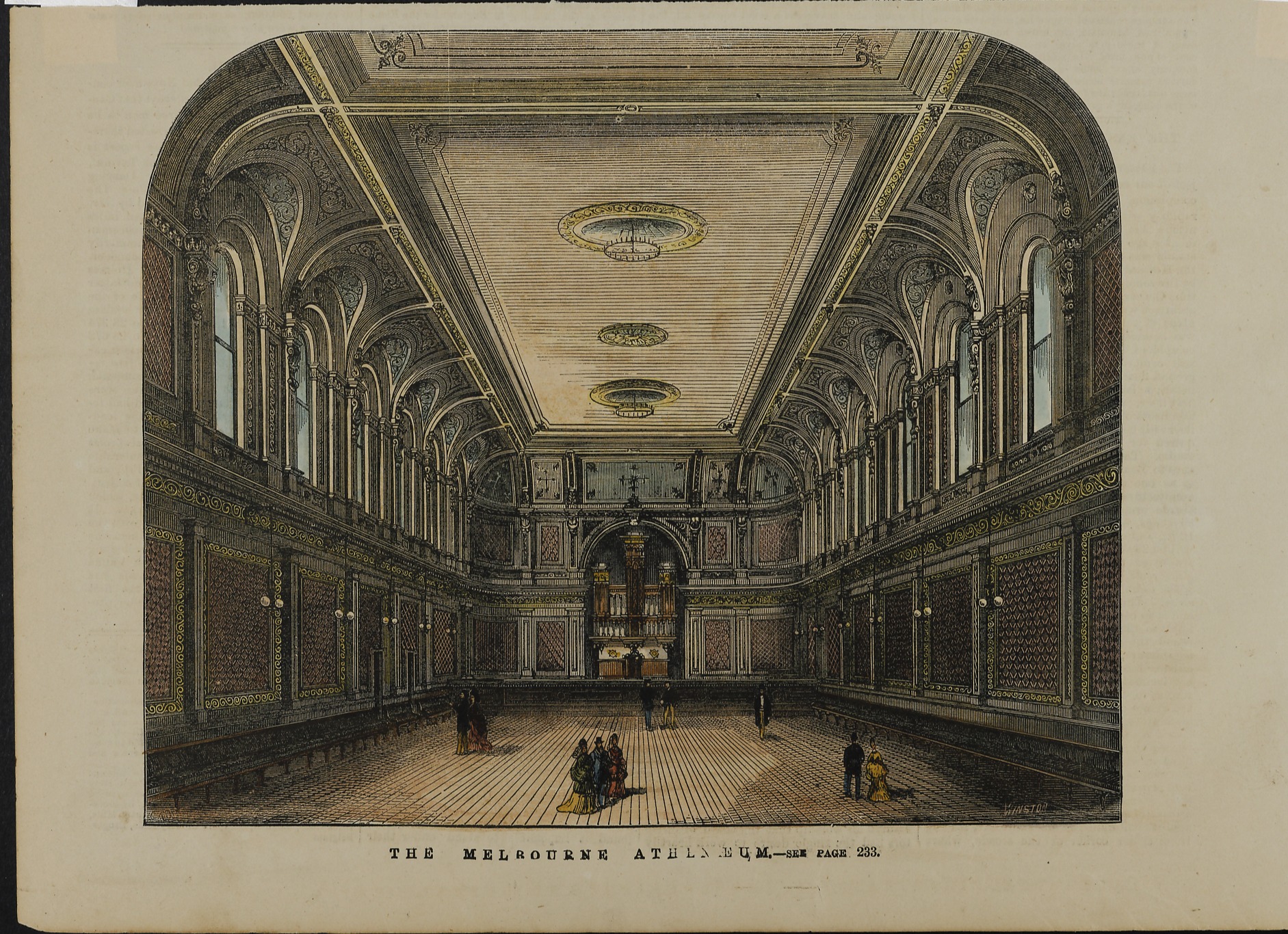
1872 was a year of change. A grand large hall was built on the ground floor, the library was moved to a larger space on the first floor (where it remains to this day), and the name of the institution was changed to the Melbourne Athenaeum. A small section of the library was also set aside as a Ladies Room, which the all-male Committee of Management noted was well stocked with an “excellent selection of magazines and newspapers more particularly suited to their tastes”.
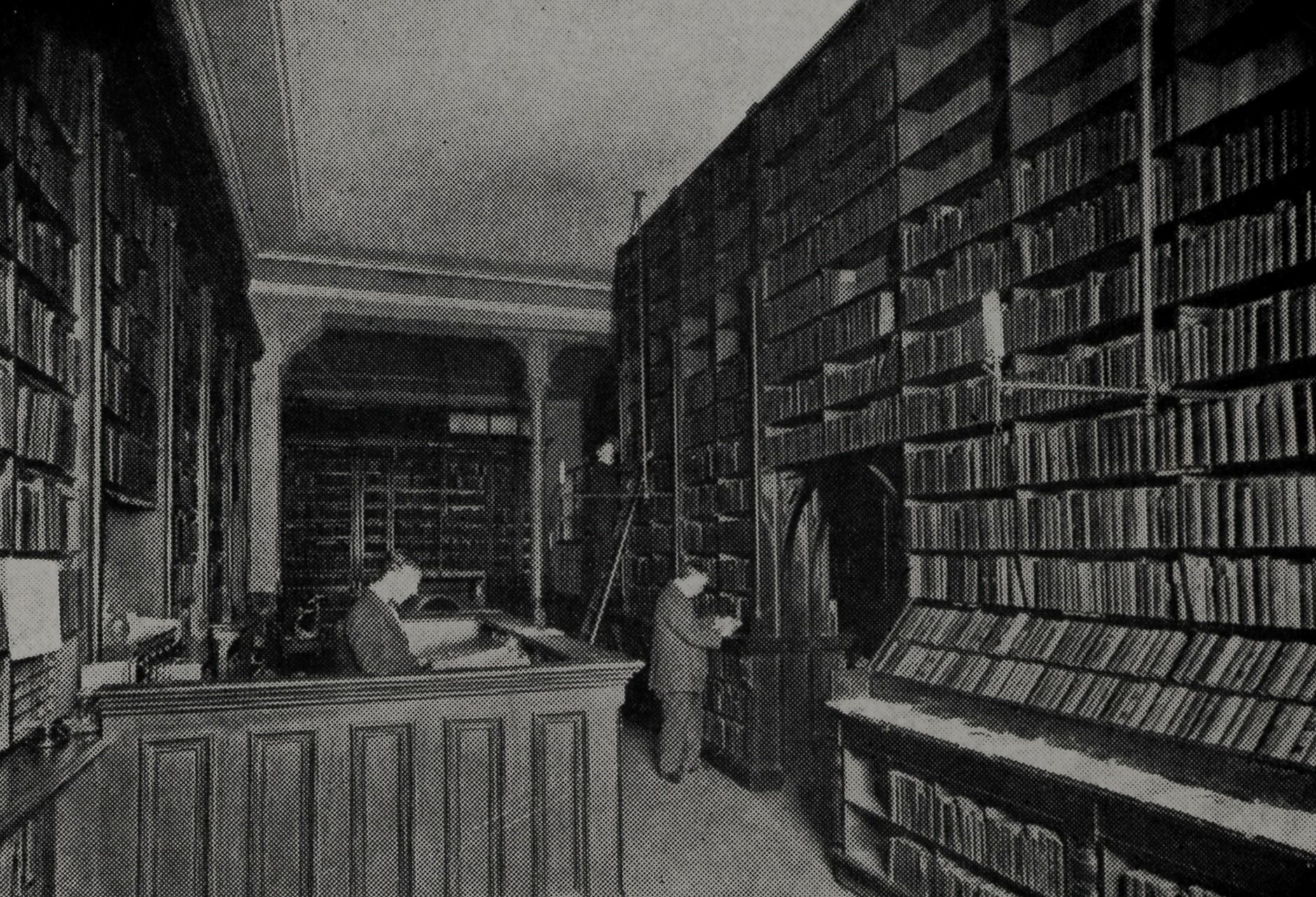
A brass plate proclaiming a one guinea subscription charge, which sits above the library shelves, was fixed to the outside of the building in 1907. The fee was set in 1876, an increase of only one shilling since 1840 and which remained unchanged until 1950.
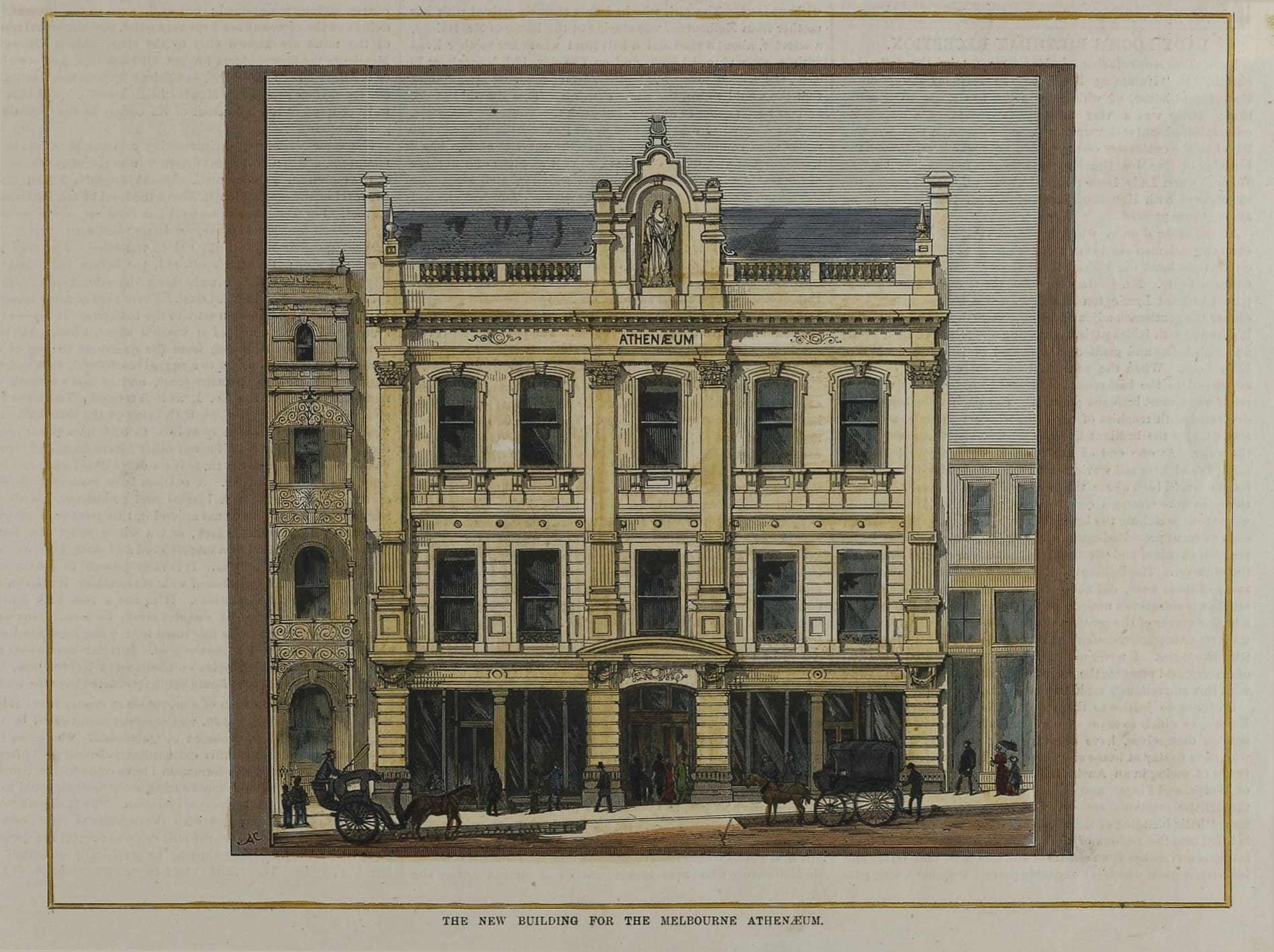
In the 1880s, further renovations were undertaken on the building, the library was made larger to accommodate the increasing number of members and electricity was connected to the library and reading room.
In 1900, the library had 668 members and it processed 20,553 loans of books and 5,507 magazine loans. In 1918 the library employed its first female member of staff, Alice Cooper, who was hired as a library assistant. Her appointment received much attention with the Herald newspaper reporting that the Melbourne Athenaeum had broken down old customs with her appointment.
In the 1920s, the library extended its reach by introducing a country membership service. Beginning in 1921 with one member, it peaked in 1970 with 528 members.
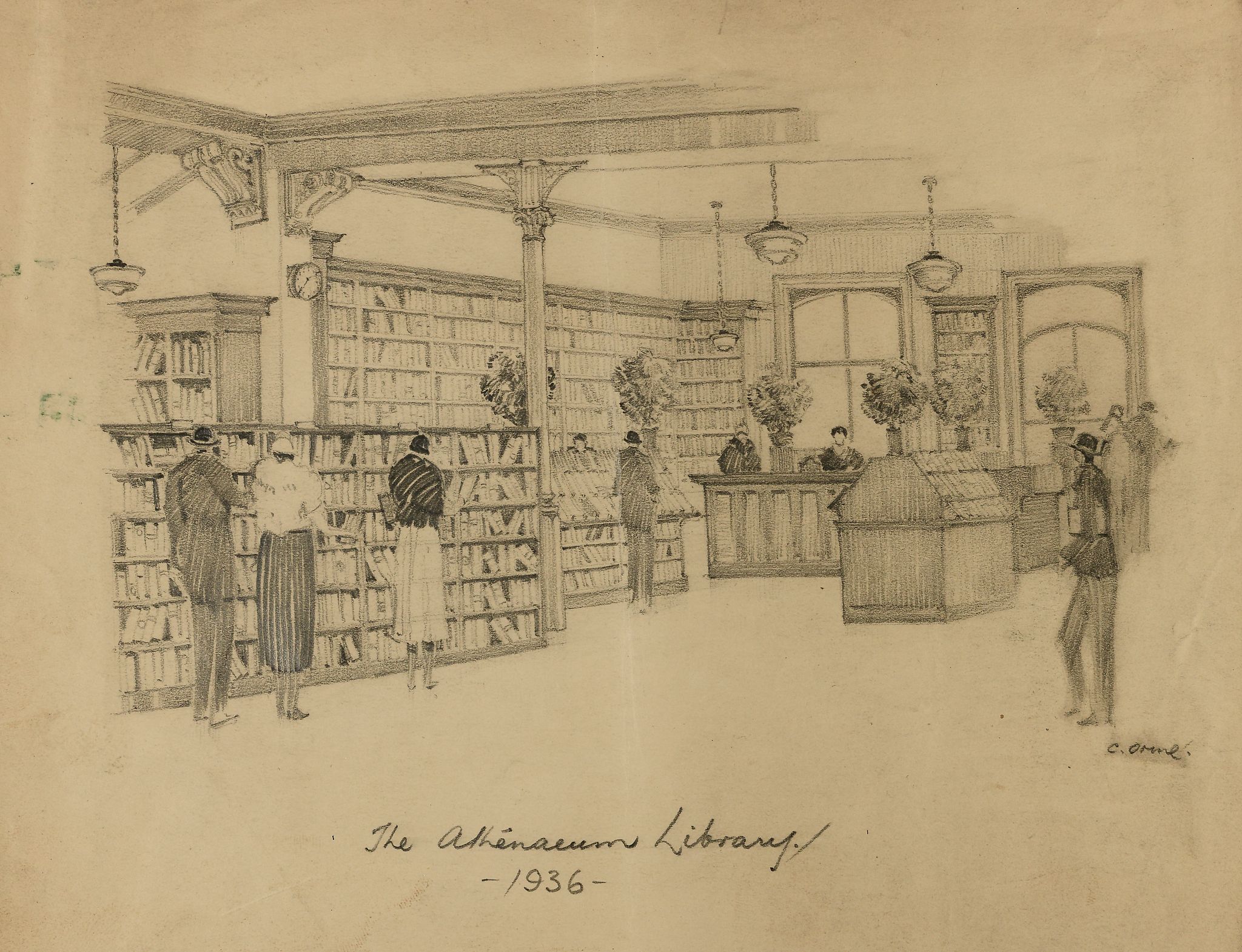
In 1939, the dividing wall between the library and the reading room was removed, creating one open plan space. A curved loans desk was installed, which is still in use today. The renovated library was officially opened in 1940 and proceedings broadcast on ABC radio, 3LO. A brochure promoting the newly-renovated library from that year reveals that much of the design layout has been retained and is visible today.
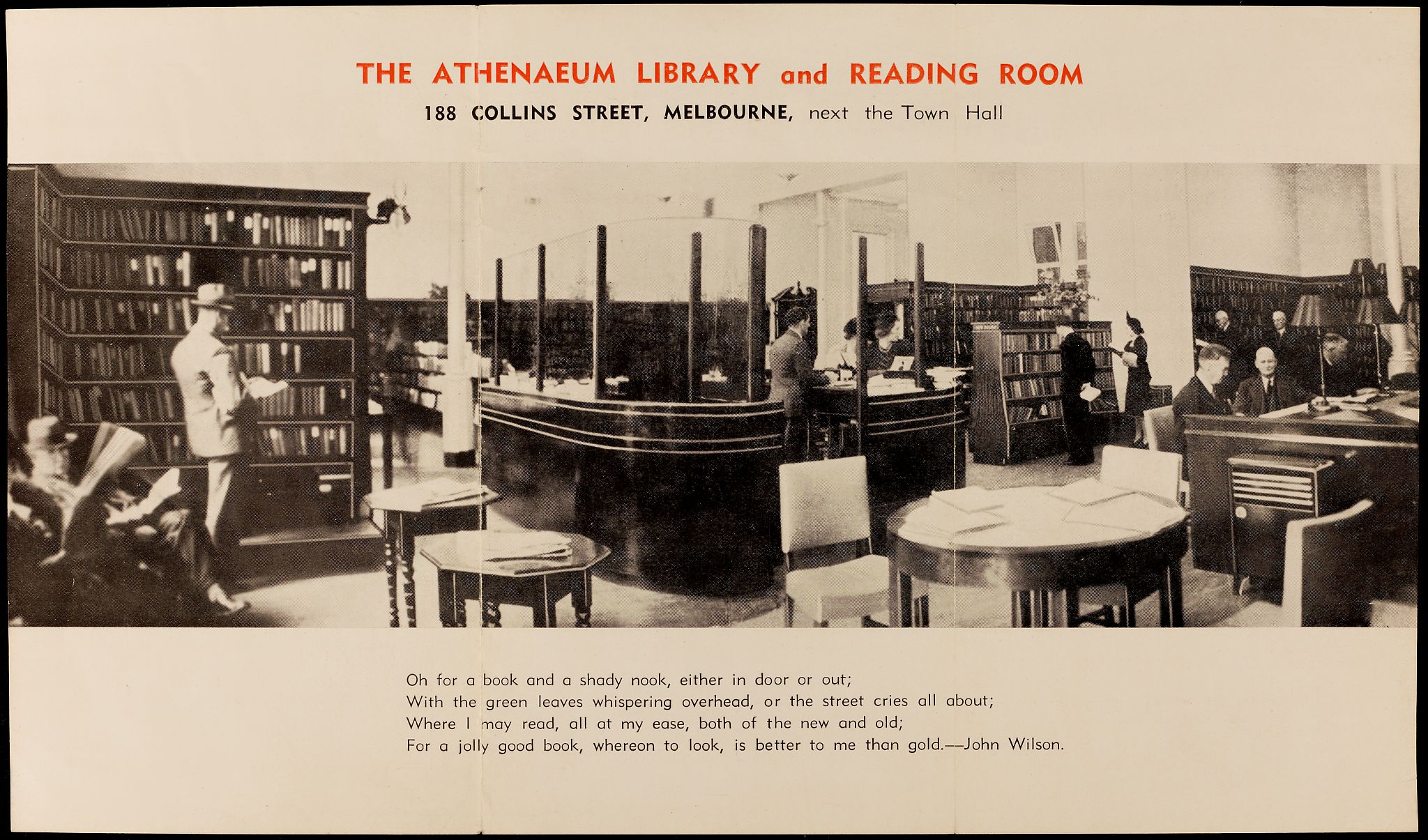
In 1952, membership peaked at 7579 members. This decade also saw the introduction of the Dewey Decimal Classification system of cataloguing which classified books according to subject. In 1959 the library established an LP record collection with a special membership rate, noting that most households had a record player and that listening to music had become a leisurely pursuit. The LP record library ran for 28 years.
By the 1960s membership of the library was declining. This was due to the impact of television, the introduction of free public library services and the development of local shopping complexes, which meant people did not need to travel into the city. As a result, the institution opened a branch library at the newly-built Forest Hill Shopping Centre in 1969. However, it was beset with problems and closed in 1977.
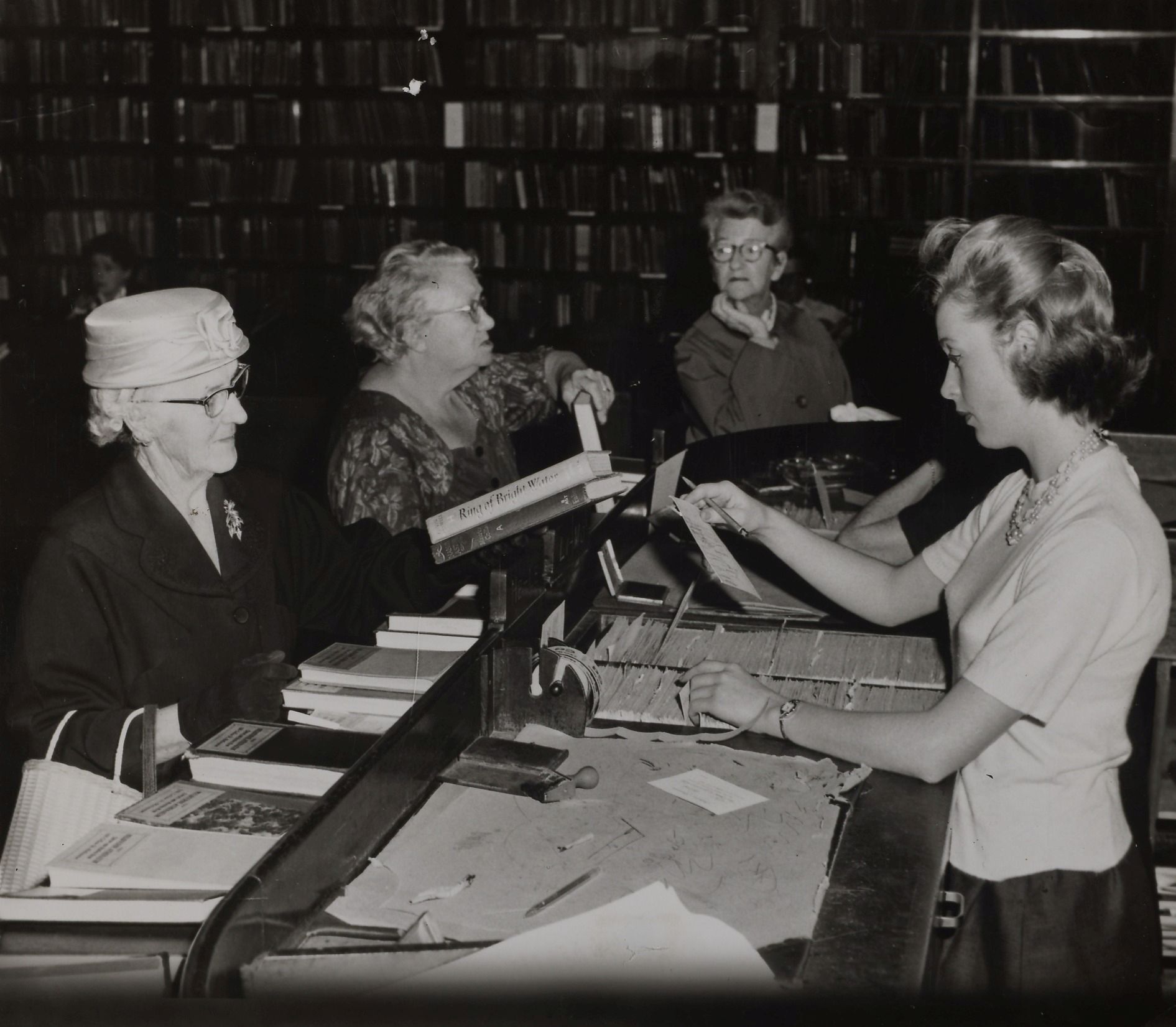
At the start of the new millennium, the library acquired its first computer cataloguing software but the institution assured its members that the library would still retain its old-world charm. Today it has more than 1000 members, some of whom have been subscribers for more than fifty years. The collection has grown to 30,000 books, as well as eBooks, DVDs, audio books and magazines. It remains a haven in the heart of a bustling city, providing a robust program of cultural events annually.
If you would like more information on the library today please click here.