The Melbourne Athenaeum Library will be closed on Saturday April 25 for the ANZAC Day public holiday.
The library will be open regular hours on Friday April 24 and Monday April 27.
The Athenaeum Art Gallery was the brainchild of R.W.E. Wilmot, then-Secretary of the Melbourne Athenaeum. Discussions he had with artists Walter Withers, Bernard Hall, Frederick McCubbin and John Mather about remodelling the upper hall into a gallery resulted in the installation of a lantern light made of Muranese glass constructed in the roof.
Further support for the development of the gallery was gained through the Victorian Artists Society which agreed to rent the space for its eight-week annual members’ exhibition for a four-year period.
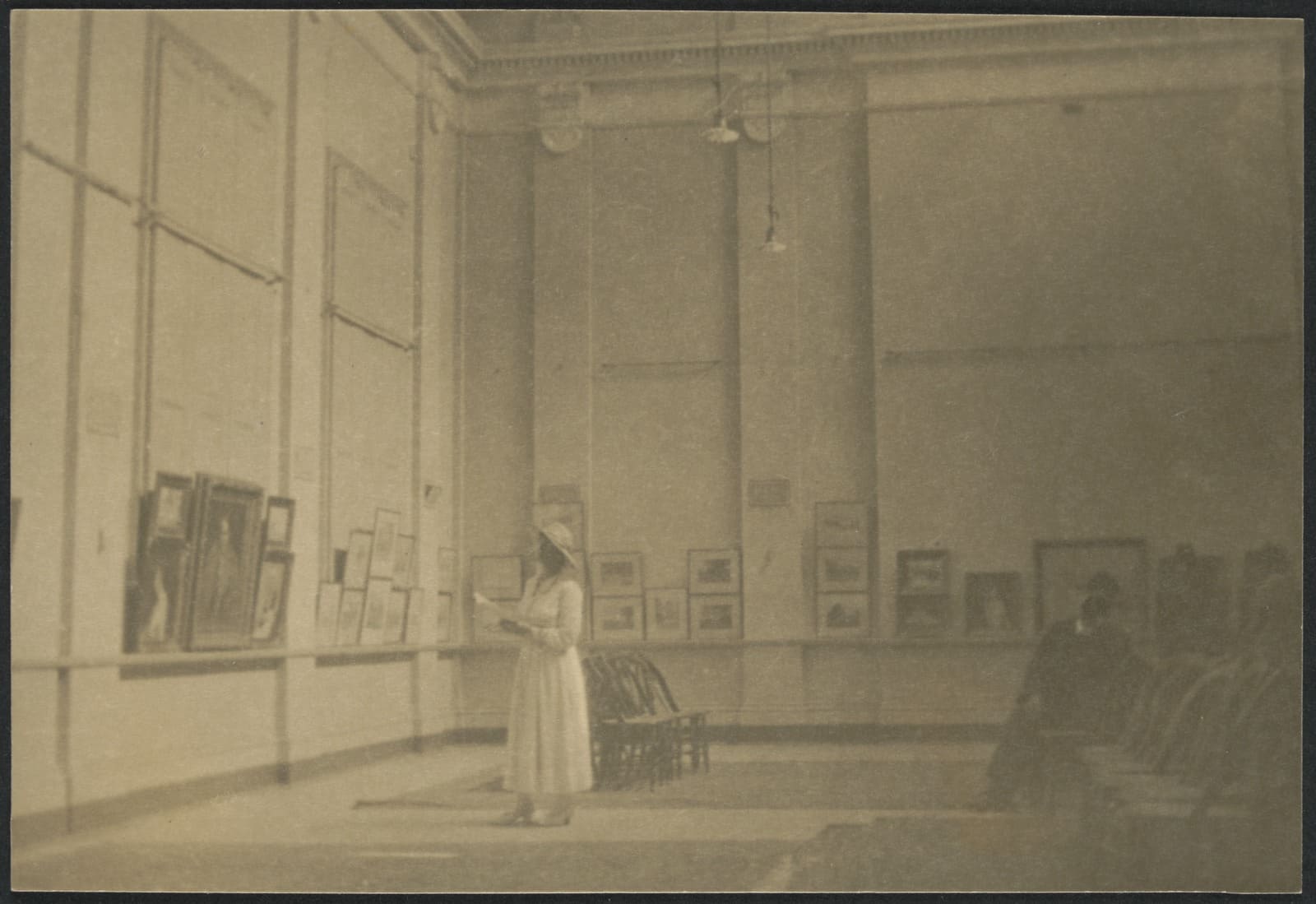
The formal opening of the gallery took place on 11 August 1910, and the space was described in the Argus newspaper as a “splendid gallery”. It measured over nineteen metres in length, nearly twelve metres in width and was “painted a greenish umber colour, relieved by a buff frieze”.
Within two years of its opening, the Athenaeum’s Annual Report recorded that the gallery “has now established a world-wide reputation”. In the same year further alterations were made including removing the stage so that the hanging line around the gallery was uniform.
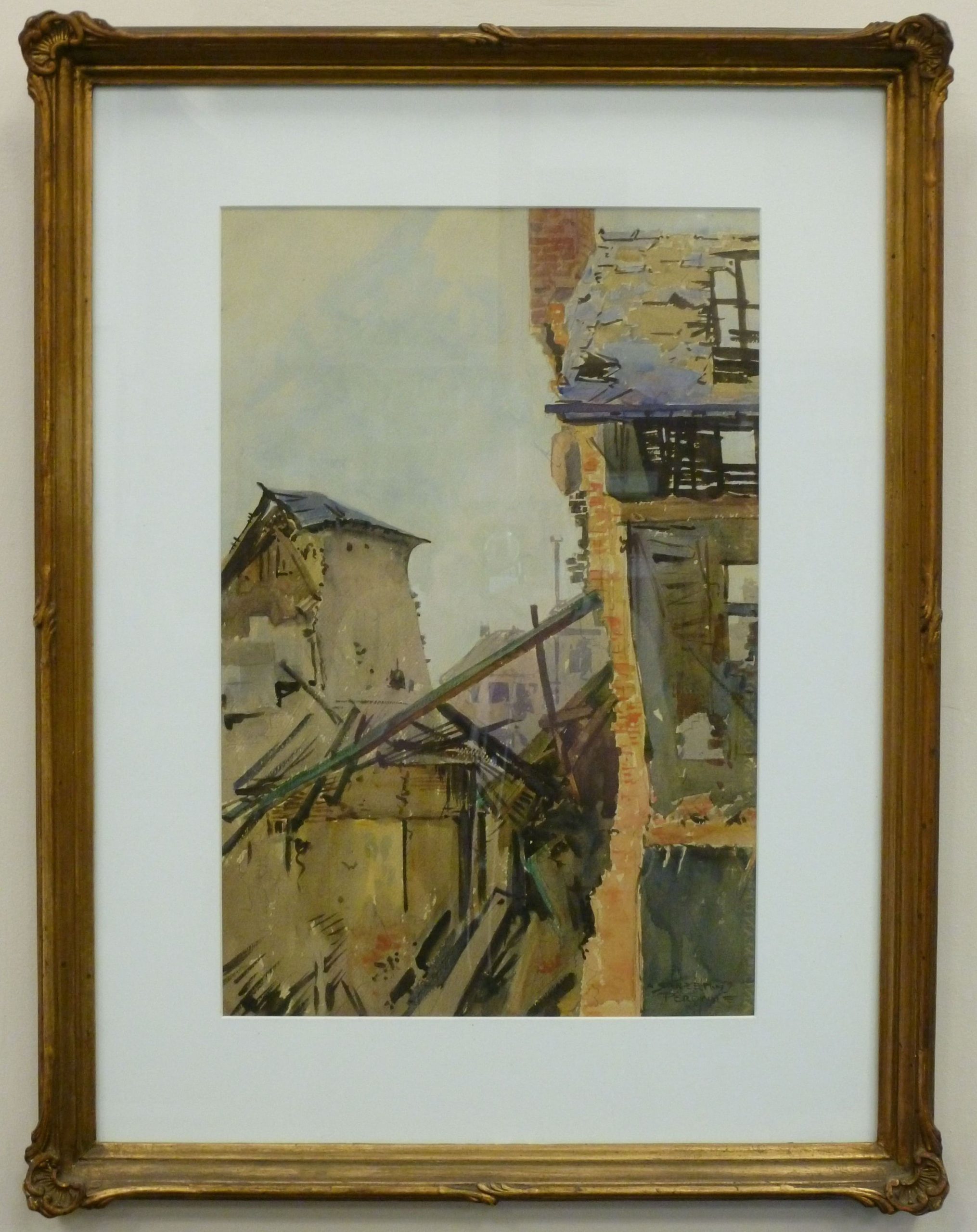
By 1914, various exhibitions had been held at the gallery and among the individual exhibitors was Arthur Streeton, considered to be one of the founders of Australian Impressionism. Streeton had a long association with the Athenaeum Art Gallery, exhibiting in the space on several occasions. In 1926, Streeton gifted the Melbourne Athenaeum one of his paintings, Ruins at Péronne. He was made an honorary lifetime member of the institution in appreciation. The painting is on permanent display in the Melbourne Athenaeum Library.
With the outbreak of World War I, the gallery experienced a decline in revenue with the cancellation of exhibitions. In 1918 the committee of management provided the gallery free of charge to a group of Melbourne artists led by Violet Teague for an exhibition to raise money for the French Red Cross. Salon des Poilus consisted of 230 works by highly regarded artists of the day such as Clara Southern, Ellis Rowan and Bernard Hall. The exhibition raised £650. With the war coming to an end, the gallery was renovated and redecorated, reopening with an exhibition of works by English artist James Clarke Waite.
Throughout the 1920s the gallery was in much demand. During this period, Max Meldrum, who championed tonal effects in painting, exhibited there regularly, along with his pupils. Meldrum had opened his own art school in Melbourne in 1915 and one of his best-known pupils was Clarice Beckett. She exhibited with Meldrum and held several solo shows at the gallery from 1923 to 1933.
In 1930 the three floors of the building were connected by the installation of an electric lift (which is still in operation today). The easier access to the gallery resulted in an increase in visitor numbers. But the early years of the 1930s saw Australia in the depths of the Great Depression, leading the committee to reduce the gallery’s hiring fees. This assisted with maintaining a regular exhibition program, the annual report of 1931 noting that “the popularity of the Art Gallery has been maintained”.
With the outbreak of World War II in 1939, the committee reduced the gallery rental fees by 33 per cent, a reduction that remained in effect for the duration of the war. As part of air raid precautions the lantern lights were blacked out and new electric lighting was installed.
In 1940 an exhibition was held to raise funds for the Red Cross War Appeal. Three years later a large display was mounted, featuring works produced by artists serving in the armed forces with sales from works once again given to the Red Cross.
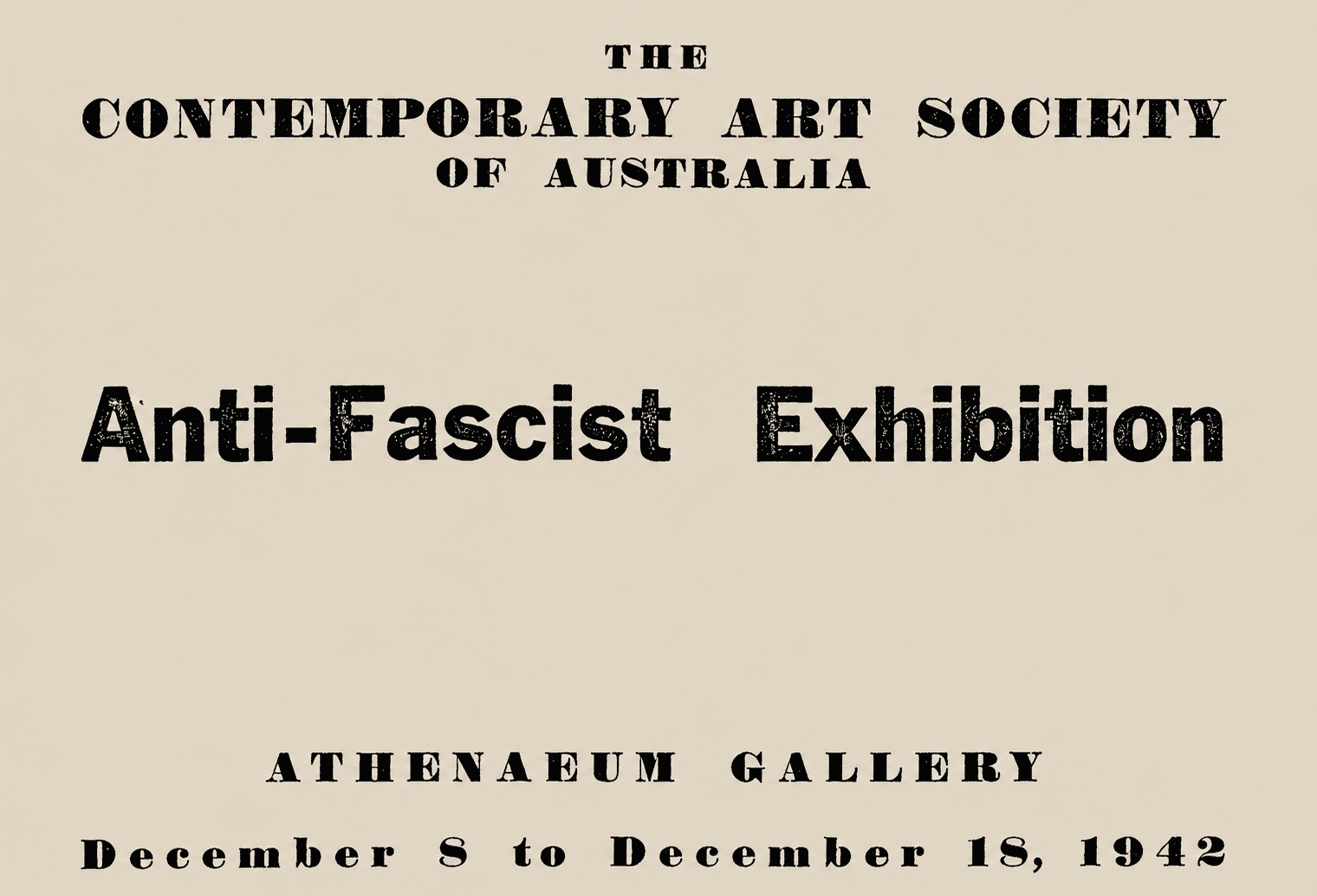
In 1942, the important anti-fascist exhibition arranged by the Contemporary Art Society was staged. The exhibition included works by Australians Doritt Black, Albert Tucker, and Sidney Nolan as well as German artist Käthe Kollwitz, whose work had been banned by the Nazi regime and was being exhibited in Australia for the first time.
In this decade, the gallery also hosted exhibitions by Arrernte artists Edwin Pareroultja, his brother Otto Pareroultja and Albert Namatjira, showing vivid watercolours of the landscapes of central Australia.
The 1940s ended with the gallery having been much in demand all decade. As 1950 commenced, the committee proudly stated that the gallery “is still the largest and best … in Melbourne, other than the National Gallery [of Victoria]”.
In 1954 it was the venue for an exhibition arranged by the Aranda Arts Council. Two years later, Melbourne hosted the Olympic Games and the Fellowship of Australian Artists mounted a special Olympic Year Exhibition. By the close of the 1950s, fluorescent lighting had been installed, providing much better illumination.
By the late 1950s and early 1960s, the Athenaeum Gallery found itself competing with a new wave of commercial art galleries, many located in the inner suburbs of Melbourne.
As a result, there was a decline in exhibition bookings and attendances. Renovations were undertaken to modernise the gallery and in 1969 the lighting system was overhauled and its interior repainted. Three modular display walls were also constructed, bringing greater flexibility in how works could be displayed.
These improvements did not increase the patronage of the gallery and by 1971 the space was in use for only 15 weeks of the year. The space ceased being a gallery in that same year and was leased to the Melbourne Theosophical Society until 1975. In 1977, the Melbourne Theatre Company (MTC) took over the lease of the large theatre as well as the gallery. Since the MTC departed in 1984 the gallery, now known as Athenaeum 2, has been used as a small performance and rehearsal venue for various productions.
For a more detailed history of the Melbourne Athenaeum Art Gallery click here.